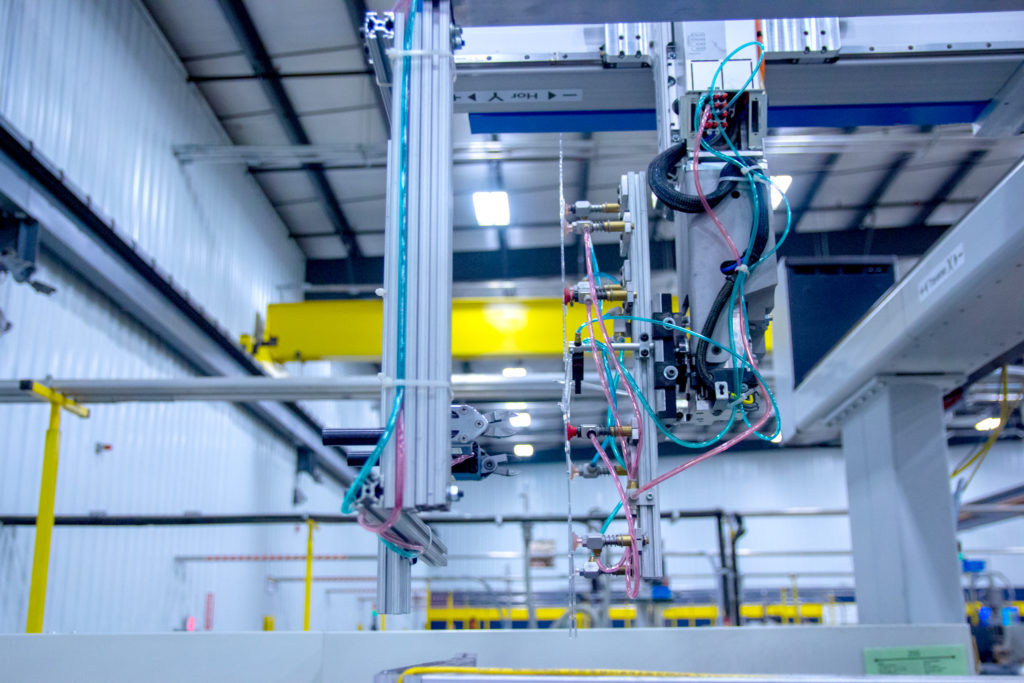
Operating a 100,000 sq. ft. Sterling, Illinois, facility, P&P Industries is one of only eight certified RJG Tryout Shops in the United States, utilizing scientific injection molding to achieve 20% productivity gains and maintain standard machining tolerances of +/- 0.001 in.
Sensor-Driven Process Validation for High-Complexity Tooling
Replacing subjective operator adjustment with empirical polymer physics, our engineers execute decoupled injection molding strategies backed by real-time cavity pressure sensor monitoring. Across our press fleet of 30+ active machines ranging from 50 to 780 tons, every production run is monitored via the RJG CoPilot platform to isolate polymer viscosity shifts, manage thermal variability, and hold strict dynamic control over fill and pack speeds.
By locking in a scientifically validated molding window during pre-production tryouts, P&P Industries minimizes scrap, shortens cycle times, and eliminates field failure risks in heavy-use applications. Certified under ISO 9001:2015 and holding a rolling 24-month defect rate under 100 PPM, we deliver repeatable, tight-tolerance (+/- 0.001 in) components designed for high-longevity OEM programs.
Rigorous Mold Tryout (RMT): Definitive Tool Qualification
Accelerating time-to-market while eliminating tooling revision loops requires empirical pre-production validation. P&P Industries executes Rigorous Mold Tryout (RMT) protocols to establish a repeatable molding window before approving tooling for full production runs. This structured methodology protects tool steel, mitigates launch delays, and eliminates trial-and-error operator adjustments when transferring legacy tooling or qualifying new builds.
During pre-production evaluation, engineers optimize gate seal, thermal balance, and pressure transfer points using standardized setup protocols. Our modernized manufacturing facility accommodates tooling up to 16,500 lbs with maximum platen footprints of 60 in x 60 in.
We build and qualify SPI Class 101 high-volume production tools (rated for 1,000,000+ cycles) within an 18-week lead time, while producing prototype sample parts from SPI Class 105 tooling in under one month. Integrating these trials with early Design for Manufacturing reviews resolves wall thickness variations, sink risks, and parting-line mismatches before steel cutting begins.
Decoupled Injection Molding via RJG CoPilot

Eliminating sink marks, voiding, and flash across complex multi-cavity parts requires complete physical separation of volumetric fill from dynamic pressure packing. P&P Industries implements decoupled injection molding practices across our press fleet of 30+ active machines. High-speed volumetric filling (Stage 1) fills 95% to 98% of the cavity under strict velocity control before transitioning to Stage 2 pressure control for packing and holding phases.
Legacy monitoring hardware like eDART has been retired and replaced entirely by the RJG CoPilot platform. Pressure transducers installed directly inside the mold cavity capture microsecond pressure spikes and thermal shifts. By analyzing real-time cavity pressure curves, the CoPilot system automatically detects process shifts caused by lot-to-lot resin viscosity changes, preventing defective parts from entering the shipment stream.
Controlling molding variables through sensor-driven processing yields immediate production gains. For example, reducing a 30-second cycle time by just 1 second recovers 2 additional cycles per minute. Over a standard operating schedule, this saves approximately 166 production hours per machine annually, compounding cost reductions without compromising mechanical integrity.
Predictive Physics: Mold Flow Analysis and Rheology
Mitigating structural defects in high-stress components relies on computer-simulated polymer dynamics paired with empirical shear rate testing. Partnering with specialized simulation vendors, P&P Industries conducts Mold Flow Analysis to predict melt-front progression, locate weld lines, and calculate volumetric thermal shrinkage during initial engineering phases.
Process engineers establish in-mold viscosity curves during physical tryouts to identify the non-Newtonian behavior of molten polymers. As injection speed increases, shear thinning lowers polymer viscosity until reaching a stable processing plateau. Operating within this plateau insulates the molding process against minor batch-to-batch material variations, ensuring consistent cavity fill without degrading polymer chains.
Material Mastery: Processing 180+ Resins
Managing a portfolio of over 180 engineering resins and 700 custom colors requires precise thermal control and specialized screw design. We regularly process demanding thermoplastics engineered for outdoor, high-load, and corrosive environments.
Our core material processing matrix includes:
- Glass-Filled Nylon (Polyamide): Engineered for structural metal-to-plastic conversion projects in agricultural equipment, delivering high tensile strength and thermal resistance.
- Ethylene-Vinyl Acetate (EVA): Formulated for high-durability grips, flexible seals, and impact-absorbing components.
- Polymethyl Methacrylate (PMMA): Processed for optical clarity, weatherability, and UV stability in commercial lenses and housings.
- Thermoplastic Elastomers (TPR/TPE): Molded for overmolding applications requiring tactile feel and vibration dampening.
Statistical Process Control (SPC) and Metric Validation
Delivering zero-defect component lots requires continuous process verification paired with precise dimensional metrology. Maintaining a rolling 24-month defect rate under 100 PPM, P&P Industries subjects every production run to Statistical Process Control (SPC) and maintains Cpk capability benchmarks of Cpk >= 1.67 on critical characteristics.
Quality engineers produce full PPAP documentation packages (Levels 1 through 5), First Article Inspection (FAI) reports, and Gage R&R studies to support strict OEM compliance. Dimensional verification is performed on our Hexagon Global S CMM system, confirming tight-tolerance features against original CAD geometry.
We hold standard custom plastic injection molding machining tolerances of +/- 0.001 in, maintaining critical feature tolerances down to +/- 0.0005 in when required by application mechanics.
Scientific Injection Molding Fleet & Metrology Specifications
|
Feature |
Specification |
Industrial Benefit |
|
Press Fleet Range |
50 to 780 tons |
Accommodates small precision gears up to large structural equipment housings. |
|
Maximum Shot Capacity |
92 ounces |
Enables high-volume injection molding of thick-walled structural components. |
|
Tool Weight Limit |
Up to 16,500 lbs |
Supports heavy multi-cavity Class 101 production molds. |
|
Maximum Platen Size |
60 in x 60 in |
Houses wide mold bases for complex agricultural assemblies. |
|
Standard Tolerance |
+/- 0.001 in |
Ensures consistent fit and interchangeability across mating structural parts. |
|
Critical Tolerances |
+/- 0.0005 in |
Prevents fluid leakage and dynamic wear in high-stress applications. |
|
Quality Standard |
ISO 9001:2015 |
Validates systematic quality management and complete lot traceability. |
Scientific Injection Molding FAQs
RJG scientific injection molding is a data-driven processing methodology that relies on real-time cavity pressure sensor monitoring and polymer physics rather than operator guesswork. Traditional plastic injection molding adjusts machine parameters based on visual part defects or subjective operator preference. RJG scientific molding utilizes decoupled injection molding to separate volumetric filling from pressure packing, using in-mold transducers connected to the RJG CoPilot platform to maintain consistent viscosity, thermal management, and part density regardless of ambient floor conditions or resin lot variations.
Scientific molding reduces scrap by locking in a mathematical “molding window” during pre-production tryouts. Mold cavity pressure sensors continuously capture microsecond pressure curves during fill, pack, and hold phases. If polymer viscosity shifts beyond established Cpk limits, the RJG CoPilot system flags the deviation immediately, automatically segregating non-conforming parts before they exit the machine cell. This process control maintains our rolling 24-month defect rate under 100 PPM.
P&P Industries is one of only eight certified RJG Tryout Shops in the United States. Qualifying tooling at an RJG-certified tryout facility guarantees that molds are tested under standardized, empirical conditions using calibrated cavity transducers and universal setup sheets. This eliminates trial-and-error adjustments during full production rollouts, protects tool steel against over-pressurization, and ensures seamless tool transfers between facilities without sacrificing component tolerances or cycle efficiency.
Concurrent engineering integrates mold design, material selection, and process engineering during preliminary product development phases. By pairing early Design for Manufacturing reviews with computer-simulated Mold Flow Analysis, our team identifies thermal imbalances, weld lines, and wall thickness variations before tool steel cutting begins. This upfront collaboration reduces mold revision loops, allowing SPI Class 101 production tooling to be built and qualified within an 18-week lead time and prototype samples delivered in under one month.
P&P Industries maintains standard machining tolerances of +/- 0.001 in across standard production runs. For high-precision applications—such as hydraulic valve bodies, tight-fitting agricultural enclosures, and complex multi-material assemblies—our scientific processing capabilities hold critical feature tolerances down to +/- 0.0005 in. Dimensional verification is confirmed using our Hexagon Global S CMM system.